


The Illustrious History of the Ford Bronco
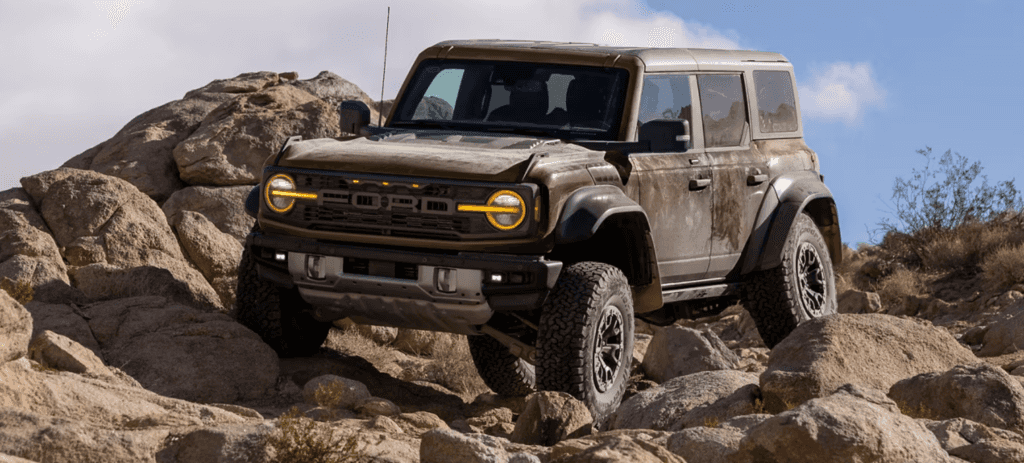
Very few American-made vehicles can rival the iconic status of the Bronco. It’s been around since gas cost 30 cents a gallon, making it one of the longest-lived nameplates in automotive history. Since its grand unveiling in the mid ‘60s, it’s gone through dozens of changes and iterations, but no matter how many times it evolved over the years, it has always stood as the benchmark for wild spirit.
Join us while we take a brief trip down memory lane and check out the many generations of Ford Bronco. From the vintage Bronco to the most current.
Generation 1: The Birth of the Rugged SUV
The Bronco began as the brainchild of Don Frey, who is also largely responsible for another legendary Ford model, the Mustang.
Ford Motor Company had spent the wartime years building jeeps (the vehicle type, not the brand) for the Allied armies. Once WW2 was over, many surplus jeeps and similar military-issue vehicles found their way into the hands of American off-road and adventure fanatics. Seeing this, Ford recognized an opportunity to create a vehicle that combined go-anywhere capability with a higher standard of comfort befitting civilian life. Thus, the idea for the Bronco was hatched.
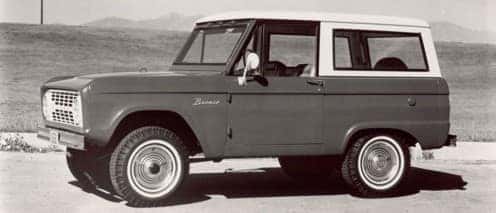
Considered by many to be the first Sport Utility Vehicle, the Bronco was an instant hit when it first released as a 1966 model. It was basically the Swiss army knife of the passenger vehicle world—it could be used as an expedition vehicle, a farm implement, a snow plow, a family daily driver, or just about anything else you could dream up. It came in multiple body styles, including the doorless and topless Roadster, the classic Wagon, and the Sports Utility, which boasted a pickup bed.
All models came with standard four-wheel drive. Initially, it was released as a 3-speed V6, but a class-beating V8 was quickly added to the mix, followed by an available automatic transmission. The list of customization options only grew from there.
The Bronco went on to become a monster in the off-road racing circuit, winning numerous titles throughout the late ‘60s and early ‘70s. In that time, it also became a fan favorite of outdoor enthusiasts and overlanders everywhere, well before “overlanding” became a hot-button modern buzzword.
Generation 2: Bigger and Bolder
As the ‘70s dragged on, sales began to dip, and Ford went back to the drawing board to revamp the Bronco for a new audience.
The revised Bronco, which was released as a 1978 model, was an entirely different beast altogether. Instead of the compact jeep-like profile of the original, the second-gen Bronco was based off the F-Series truck platform, making it far longer and wider while still retaining its trail-smashing prowess. The design changes also made it eminently more comfortable and brought it much closer to the modern standard of a family SUV. The rear passengers enjoyed more leg room, and current-day staples like A/C and radio were introduced.
All in all, the second-gen Bronco was a massive hit with the general public, selling over 180,000 units. Even Pope John Paul II got in on the action—yes, the Ford Bronco Popemobile is indeed a real thing.
Generation 3: Making the Jump from Trail to Tarmac
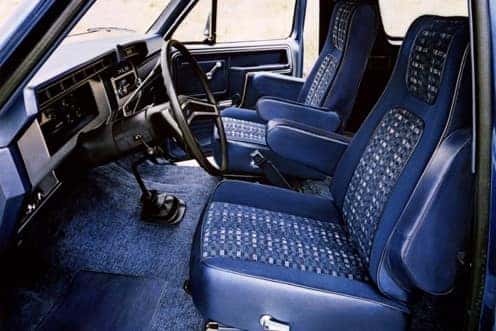
Never ones to rest on their laurels, Ford followed up with another redesign just a couple short years later in 1980.
This version of Bronco pushed the dial even further toward comfort, economy, and practicality. The chassis was altered again, and the body was made smaller, lighter, and more aerodynamic in order to improve fuel efficiency on the highway, which proved to be a massive factor due to ongoing oil embargos and rising fuel costs. The suspension was also retooled; this Bronco was the first to feature independent front suspension, which resulted in a massive performance boost both on and off the road.
Around the same time, the Bronco II made its auspicious debut. This shorter-bodied two-door SUV was similar in size to the original first-gen Bronco, and the fun-to-drive compact model saw quite a surge in popularity thanks to its throwback style, but it was eventually discontinued in 1990 after being phased out by the Ford Explorer.
Generation 4: Refining the Beast
The next iteration, which came out in 1987, saw continuing trends toward even greater fuel efficiency and aerodynamic design. The bodylines were noticeably smoothed out and contoured, as opposed to the boxier angles seen in previous versions.
There was a cornucopia of major engineering changes included in this model, including the introduction of electronic fuel injection, which further improved performance and economy. A new 5-speed manual transmission was added, providing an even more dynamic off-road experience. The fourth-gen Bronco also got shiny new rear anti-lock brakes, which are now considered an industry-standard safety feature.
This generation is also noted for its special editions, including the 25th Anniversary Edition and the blacked-out Nite Edition.
Generation 5: The Original G.O.A.T.
The final major redesign of the Bronco came in 1992. For many lifelong Ford fans today, this generation is the one they picture in their head when they think “Classic Bronco.”
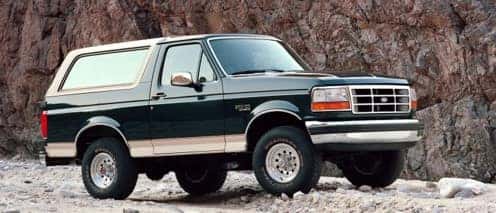
Designers really ramped up the safety appointments for this one, adding in some first-time features like a 3-point seatbelt, additional airbags, and four-wheel anti-lock brakes. Interior amenities were added by the score as well, including a digital odometer with redesigned gauges, revised knobs, dials, and handles, and multiple swanky seating configurations. The XLT, Nite, and Eddie Bauer trims also continued to be present in this generation, and all are highly sought-after in the Bronco community.
Of course, it still continued to deliver the thrills and spills it had always been known for. The Bronco became the choice mode of transportation for U.S. Forest Service rangers and Border Patrol officials.
But, all good things must end. American tastes eventually evolved to favor larger four-door SUVs like the Ford Expedition, and the Bronco began to see declining sales throughout the ‘90s. The writing was on the wall, so Ford decided to halt Bronco production indefinitely; the last model rolled out of the factory doors in summer of 1996, almost exactly three decades after the first Bronco.
And, for nearly 25 years, that appeared to be that.
Generation 6: The New Bronco and Beyond
If you’ve made it this far, you probably already know that the Bronco’s story didn’t end at the turn of the century. In 2021, the Ford Bronco made its grand reintroduction as a sixth-gen model. 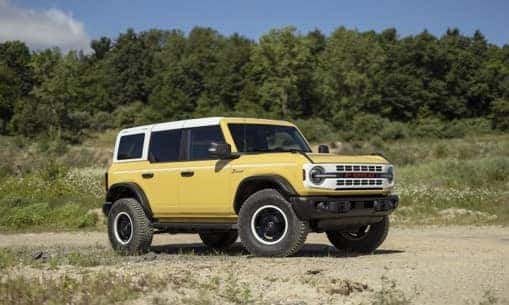
Today, the Bronco family consists of both two-door and four-door versions of the legendary off-road SUV. The decision to make two different sizes has been key to the Bronco’s newfound success, as it gives buyers an unprecedented amount of choice.
The Bronco Sport was also released around the same time—while it’s intended as a more comfort-oriented, city-friendly model, but don’t be fooled, because it can still get out in the backcountry and mix it up better than most midsize SUVs.
True to its roots, the modern Bronco is endlessly customizable with numerous combos of camping, off-roading, and overlanding gear. As always, four-wheel drive is standard. It can be optioned with either an inline 4-cylinder or a rowdy V6 engine, and shoppers can opt for either an automatic or 7-speed manual transmission. It also features a removable top and doors, all of which can be stored in-vehicle when you’re not using them.
It may have had a long hiatus, but if the new Bronco is anything to go off of, we’re betting it’ll be crushing dirt roads and sand dunes for a long time to come.
Find the New Ford Bronco for Sale Near Pensacola
If you’re ready to be a part of the legacy, Ford Crestview has new Bronco and Bronco Sport models available, as well as some killer new car specials to make sure you find the best price this side of Gulf Shores. Contact us online or call us at (850) 367-7358 today to find out how you may be able to qualify for our 20-year warranty program.
0 comment(s) so far on The Illustrious History of the Ford Bronco